
【Case Study】Why Can a Single Tote Bag Become a Company's Mobile Brand Business Card?
【Case Study】Why Can a Single Tote Bag Become a Company's Mobile Brand Business Card?
2026-09-16
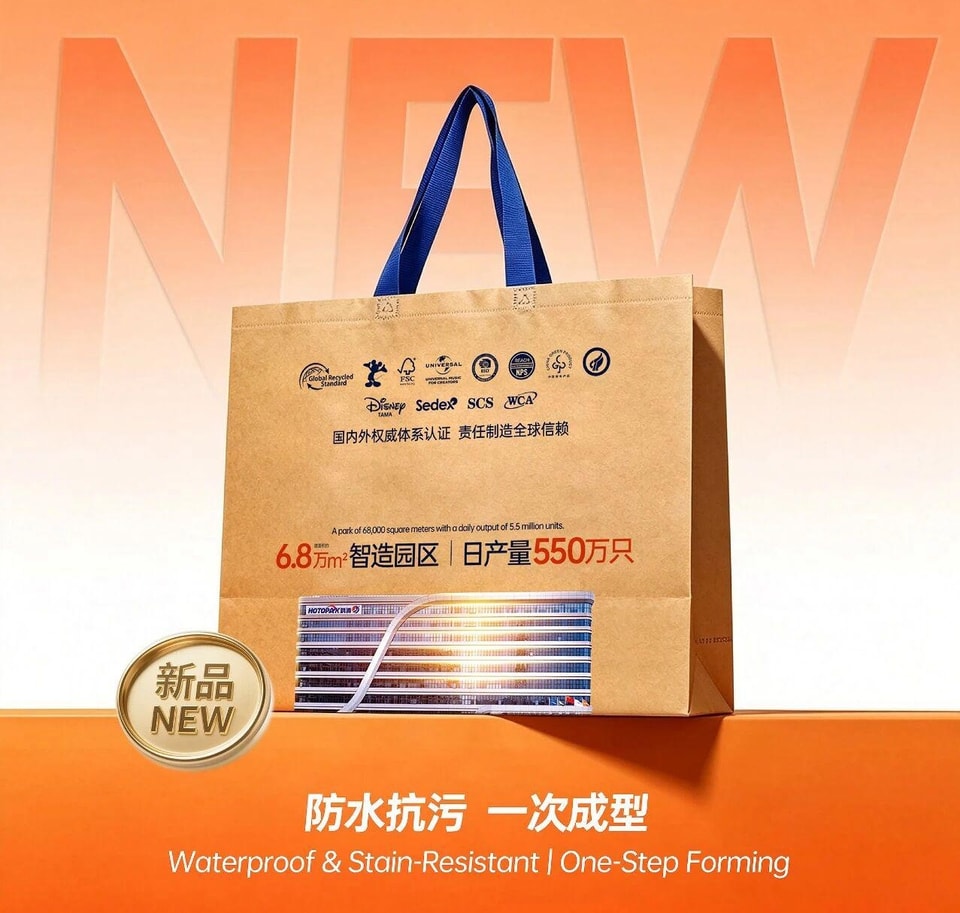
A good tote bag is the first impression a brand makes after leaving the showroom.
When a trade show ends, what customers take away is not just a brochure, but also the tote bag holding their materials.
Many companies treat it as a disposable item — print a logo on it, fill it with materials, and the job is done. But those who truly understand branding know that the real moment of communication begins after the bag leaves the booth.
The Hongtao custom composite eco-friendly tote bag featured in this case study offers a worthwhile perspective: redefining the tote bag from a "packaging consumable" into a "mobile brand display space."
Not Just a Carrier — A Brand Business Card That Walks
Traditional tote bags serve a single function: carrying items. They are discarded after use, with an extremely short exposure cycle.
01
The design logic behind this Hongtao bag is different — it centers on showcasing corporate strength, integrating brand visuals, durable materials, and long-term communication into one cohesive product. Every time the bag is reused, it represents another brand touchpoint.
02
This means its value lies not in "what it carries," but in "who carries it, where it appears, and how many people see it."
03
The suitable scenarios thus become clear: as a display item in a showroom, it extends the brand image; as a trade show giveaway, it forms the customer's first impression; as a business visit accessory, it serves as a detail that reinforces professionalism; as a client gift, it becomes the outer packaging of sincerity.
The Bag Surface Is a Condensed Corporate Strength Display Board
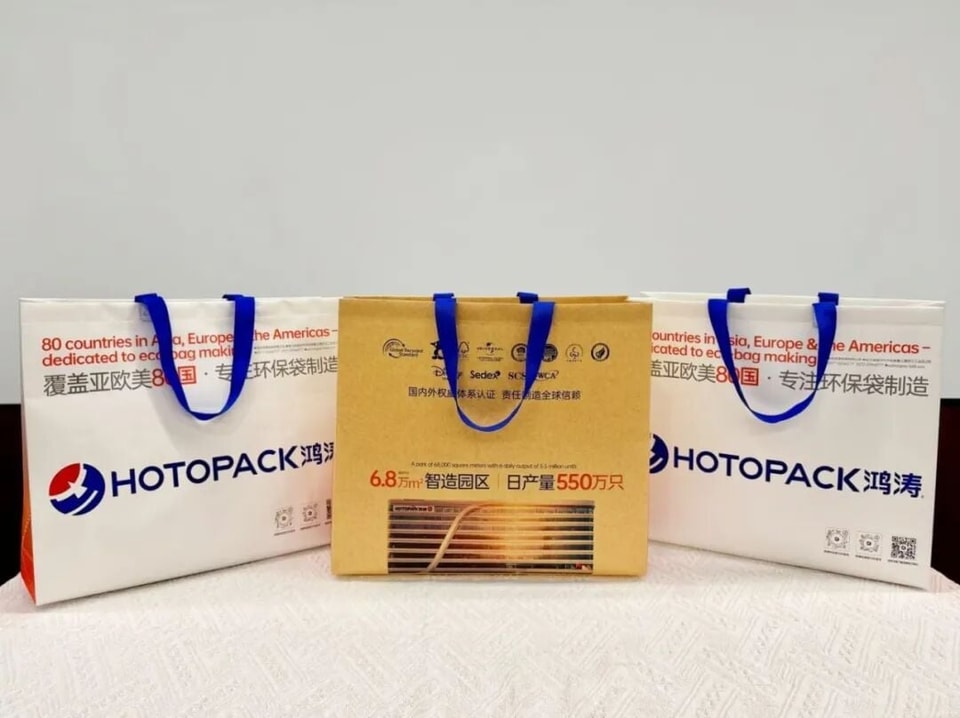
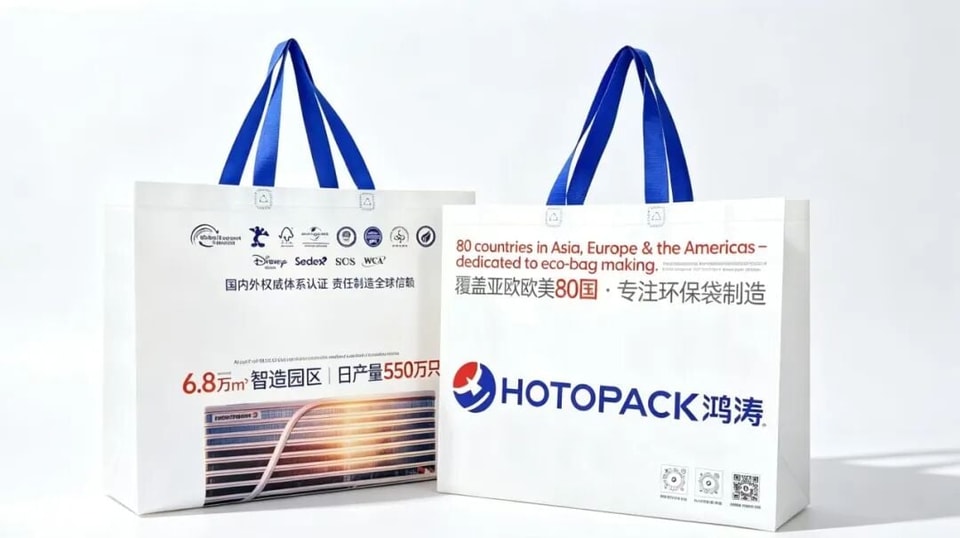
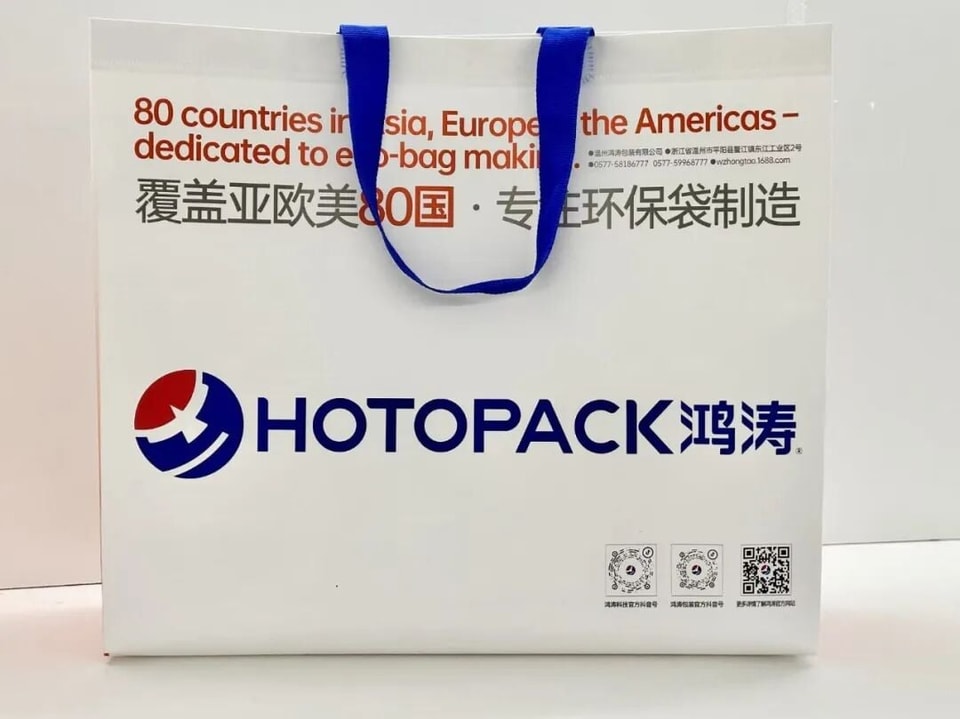
This bag is available in two base options — white and kraft — to suit different brand identities.
The brand logo establishes recognition, overseas market coverage demonstrates global reach, smart manufacturing campus and capacity data reflect production capability, and international certification marks provide quality endorsement. These four layers of information progress logically, allowing customers to form a basic judgment about the company at a single glance.
Behind this is a simple yet often overlooked logic: the surface of a tote bag is essentially a mobile corporate display board. And since it is a display board, it should convey the most persuasive information within limited space — not just a logo!
Three-Layer Composite: Getting Both Eco-Friendliness and Durability Right
A three-layer composite structure, with each layer having a clearly defined functional role.
Many eco-friendly bags share an obvious pain point: either too thin and prone to tearing, deforming after just a few uses; or made from cheap materials that undermine brand quality.
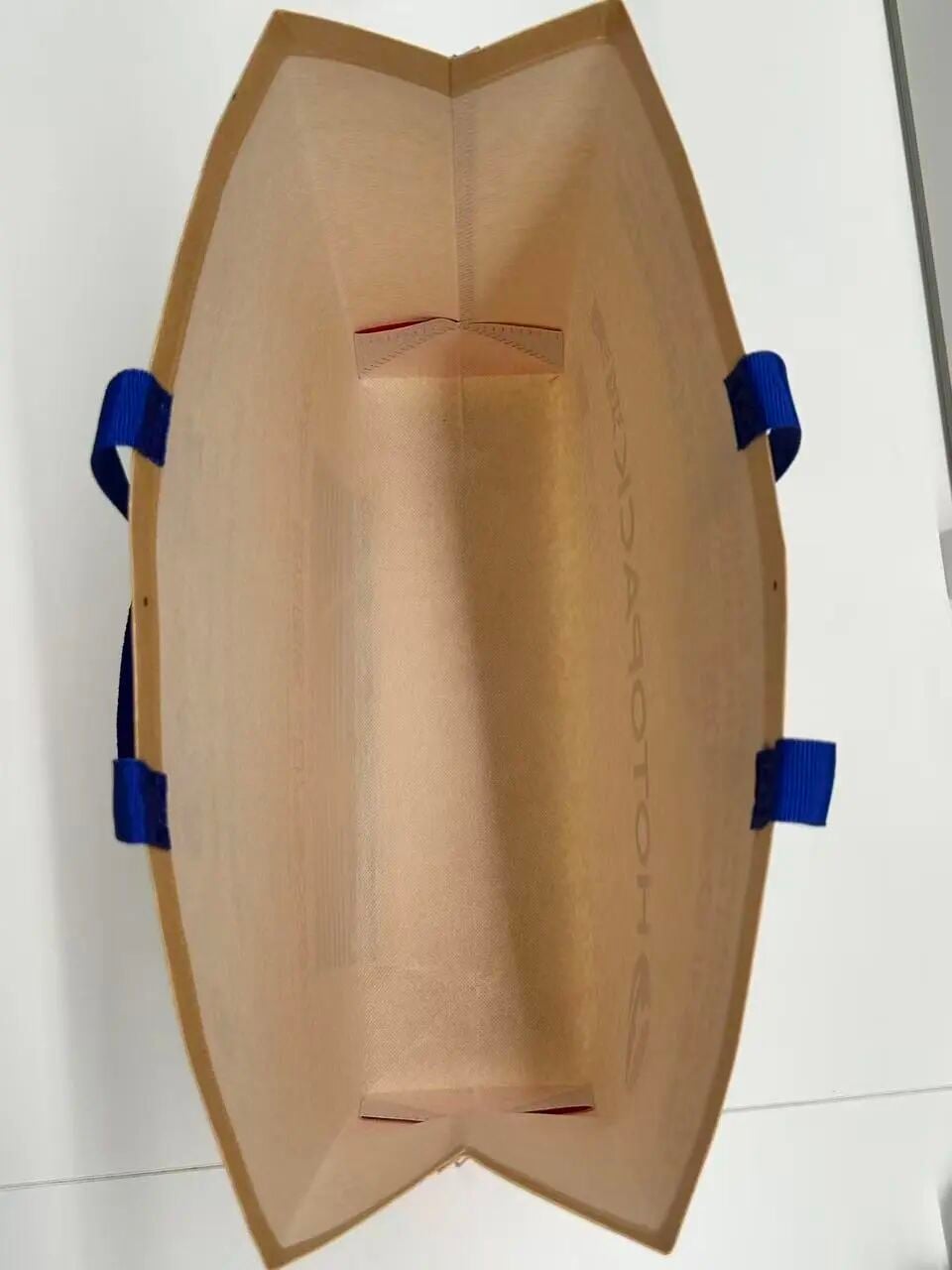
This Hongtao bag uses a three-layer composite structure of non-woven fabric, stone paper, and OPP film, with each layer performing its own function.
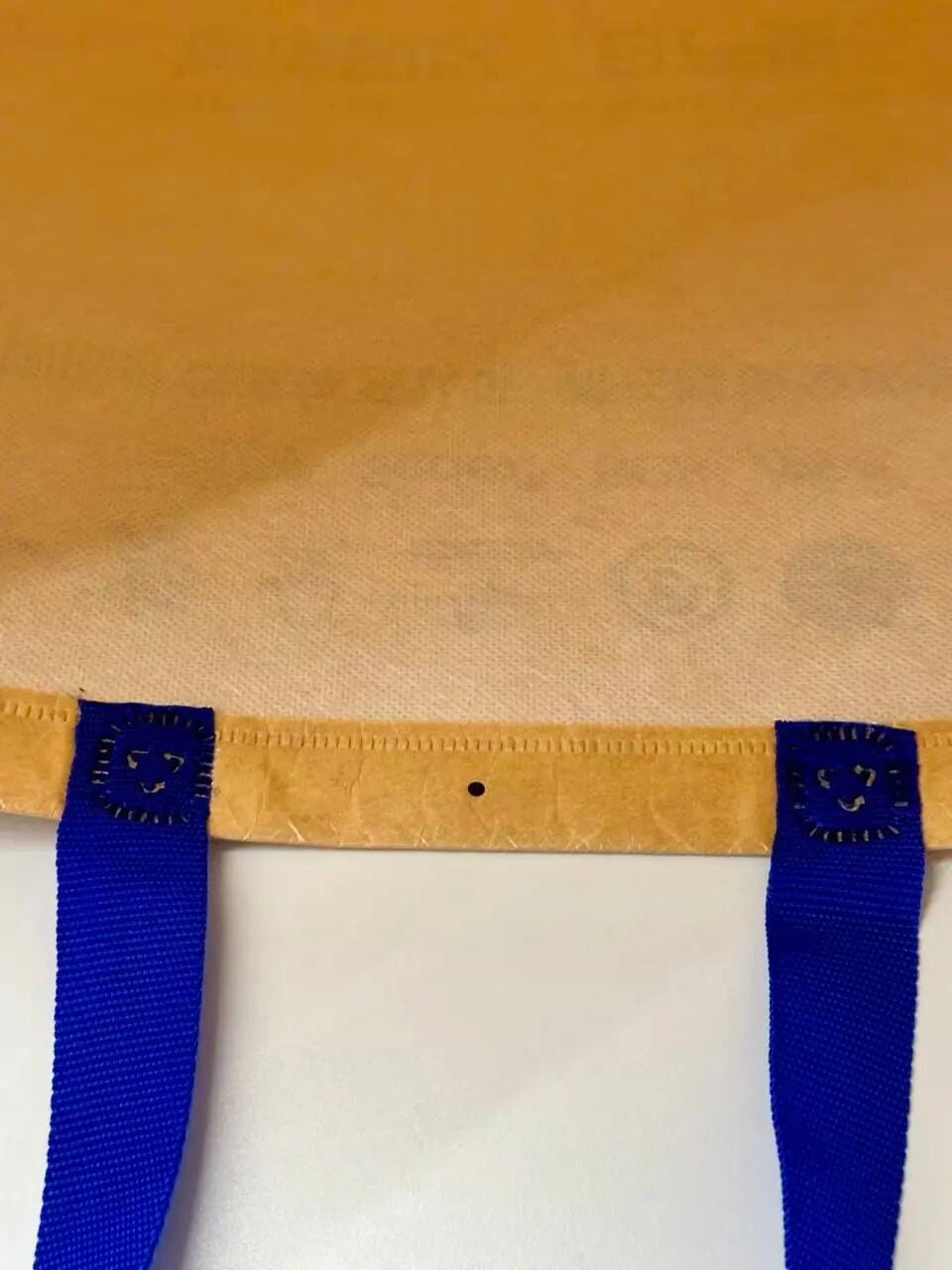
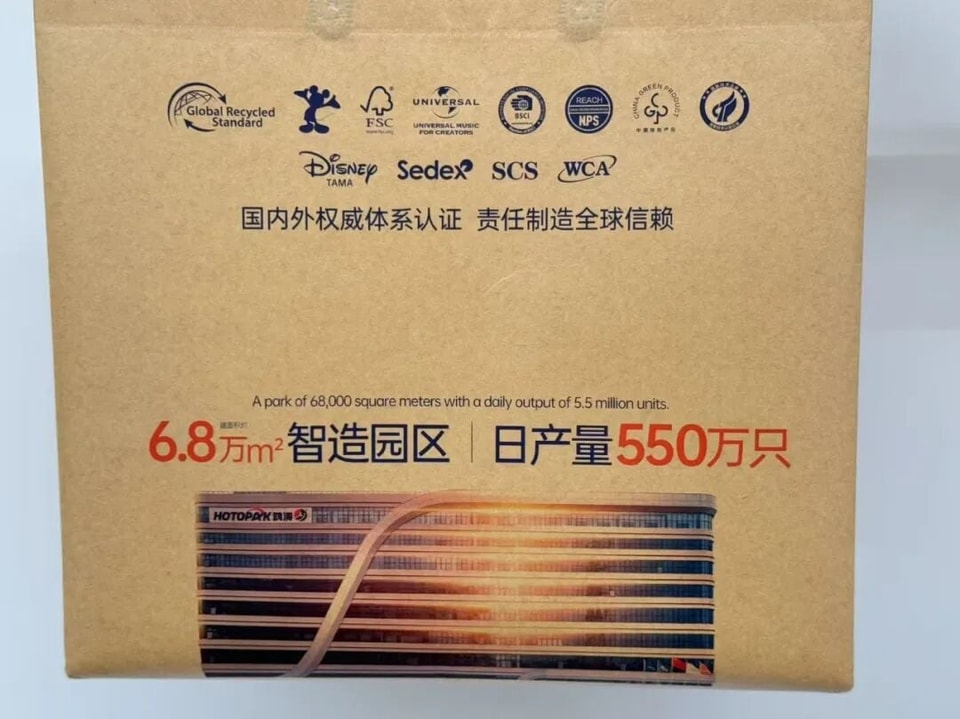
The middle stone paper layer is the core highlight. Its main component is calcium carbonate, which is biodegradable. This is not a gimmick of being eco-friendly for the sake of being eco-friendly — it directly responds to green packaging policy trends and helps companies build a responsible brand image in front of customers.
The outer OPP film provides dual protection, giving the bag water-resistant and oil-resistant capabilities. The inner non-woven fabric ensures basic toughness. The result of combining all three layers: the bag is both eco-friendly and structurally strong, avoiding the awkwardness of being "eco-friendly but not durable."
Every Detail Serves the Goal of "Repeated Use"
Whether a bag can be reused depends not only on materials, but also on craftsmanship details.
01
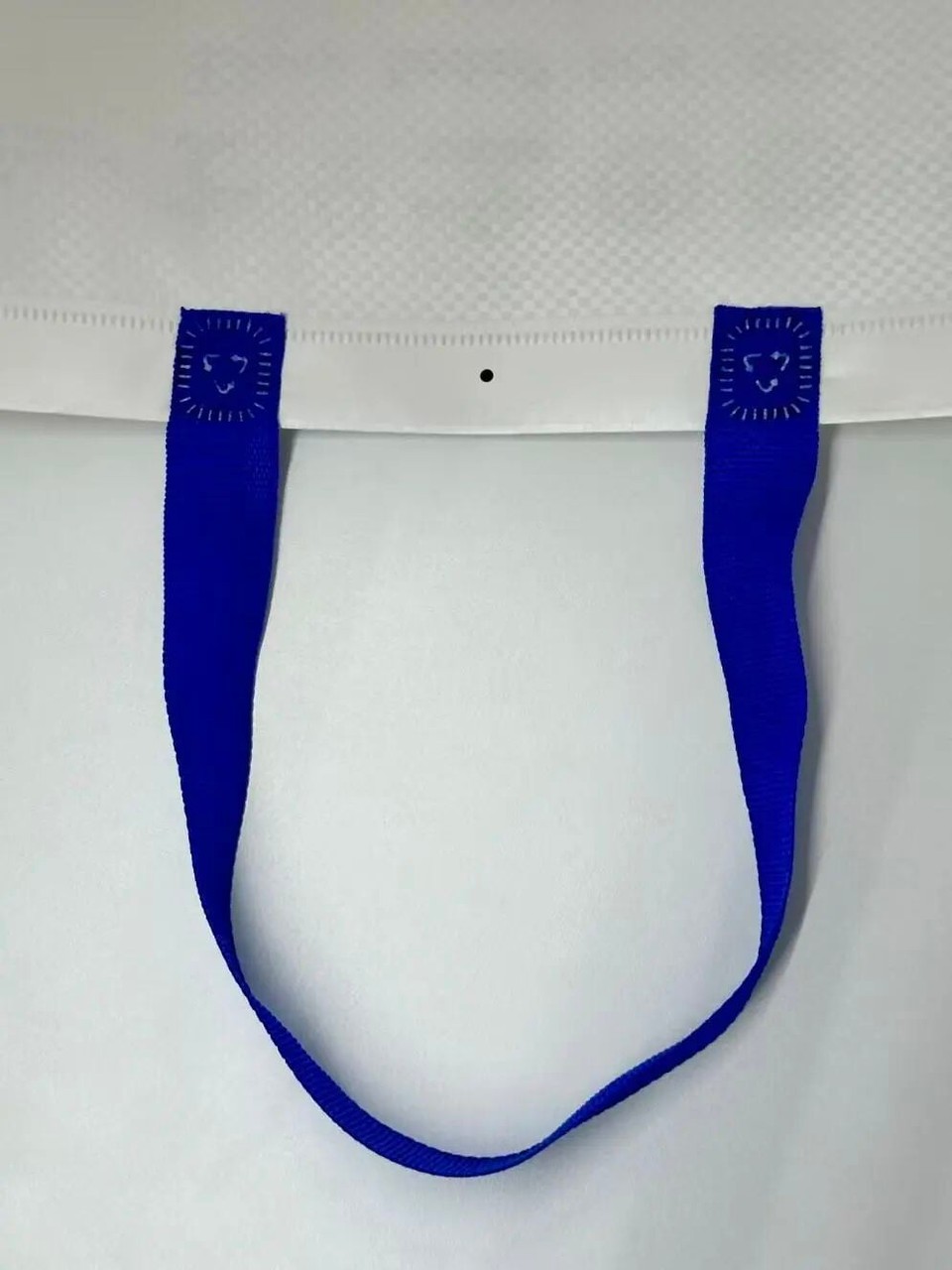
This bag adopts a one-piece molded hot-press process, with no pinholes and no stitching. This means a more complete structure, greater resistance to pulling, and less likelihood of cracking at the edges and corners.
Common issues in traditional bags, such as loose threads and needle-hole tearing, are eliminated at the source through our craftsmanship.
02
The handle is another often overlooked part that directly affects user experience. The widened woven strap handle design increases the load-bearing area, making it more stable to carry and less prone to breaking — after all, no one wants to be carrying a bag with a broken handle at a trade show.
03
The horizontal large-capacity design takes real-world usage scenarios into account: brochures, samples, and documents can all fit comfortably without being forced in.
These details may not seem impressive individually, but together they point to the same goal: making the bag useful enough that customers are willing to keep it and reuse it. And as long as the bag is still in use, brand communication has not stopped.
From Disposable Item to Long-Term Communication Carrier
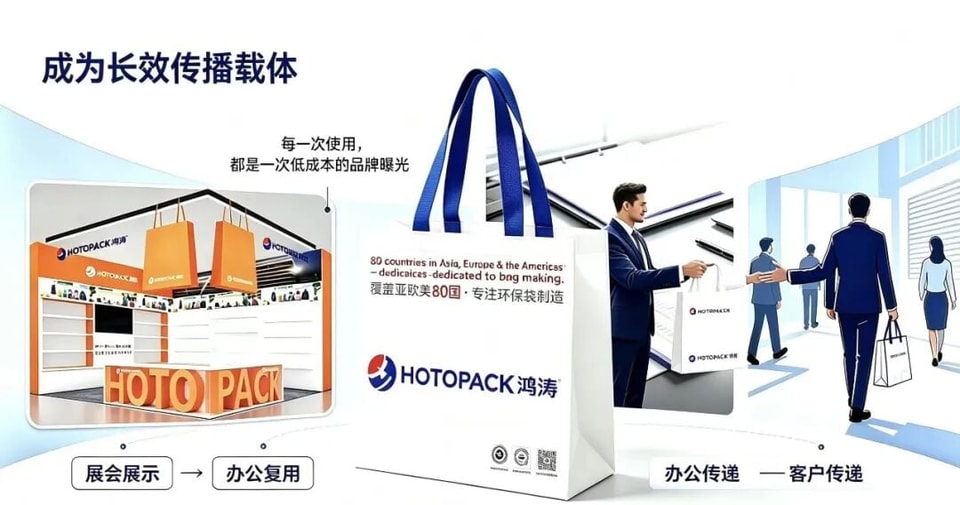
Returning to the original question: what can a tote bag do after leaving the booth?
The answer from this Hongtao bag is: become a long-term communication carrier.
It breaks out of the traditional mindset of packaging consumables, integrating business display quality, fabric practicality, and brand communication into one. Customers take the bag home, to the office, to the next meeting — every use is a low-cost brand exposure.
This is why judging whether a custom tote bag is good should not only consider printing quality and unit price, but also whether it can truly be kept and used by customers.
Contact Us

Quick Links
